
Project management software for happier users and teams.
Mevali is project management software built around user outcomes, right-sized work, Kanban flow, and optional Scrum(ban) events. It stays out of the way so teams can focus on users, design, and working together. One coherent application. No tedious configuration, plugin stack, certification, or proprietary vocabulary to learn.
Stop losing…
With Mevali
Money and opportunity on features users do not need.
Personas and Coins put user outcomes first.
Time fighting the tool.
Everyone works together, in real time.
Team energy on status reports and process theater.
Mevali brings the facts. Your team brings the judgment.
A simple system...
-
Setup measured in minutes
Create a team, choose Scrum or Scrumban, add users and personas, and start building the backlog.
-
User Outcomes
Every item carries who benefits, Persona, and what it is worth.
-
Agile-shaped stories, Trello-fast
Choose who benefits, write What they need, estimate the worth, and move on.
-
Reshape work in seconds
Promote, demote, split, and merge items and then drag dependencies into place.
-
Age-aware Kanban
Cards rise as they age, and alert when they exceed the 70th percentile.
-
Team events that earn the time
Refinement, planning, standup, review, and retrospective are built in and designed to minimize process theater. Run the ones your team wants.
Build the right thing for your users in the right order
Building the wrong thing is bad for users and bad for business. Shipping nice-to-haves before the killer feature can be an expensive mistake.
- Even cheap features must be designed, supported, taught, and fit onto users' screens.
- Lower-value work can make the next important design harder.
- Time spent on low-value work is time not spent on high-value work.
Product usage data suggests a large share of shipped features are rarely or never used. Pendo found that 80% of features in the average software product are rarely or never used, and its 2024 benchmarks found that 6.4% of features drive 80% of click volume. Pendo 2019. Pendo 2024.
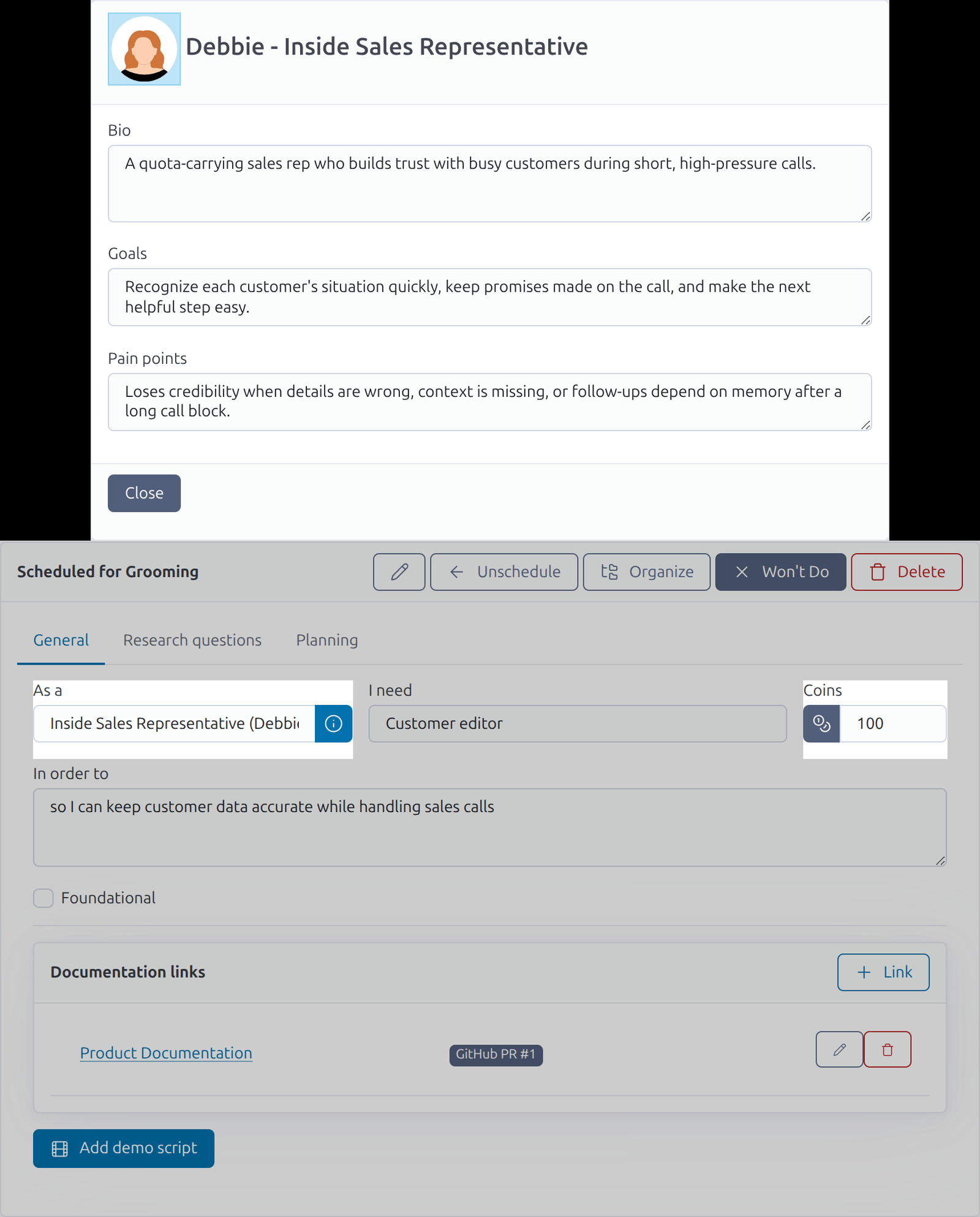
Every story is connected to the persona that benefits most. Teams can see detailed human context behind an item with one click. Coins are the Product Owner's estimate of user value, analogous to how story points estimate effort. They make value visible to the team and to AI agents.


High-performing teams know who they are building for and why the work matters. AI increases the risk of not understanding user value.
Work at the right size, think at the right level
Teams need to see the forest while working the trees. Mevali lets teams estimate and commit at the Story and Bug level while keeping Feature-level context visible.
When work changes shape, Mevali keeps the moves small:
- Promote an oversized story to a feature, or acceptance criteria to stories.
- Demote a tiny story into acceptance criteria on another story to avoid paperwork.
- Split a story, or automatically put an existing story that is in progress into a feature.
- Drag/drop to declare intra-feature blockers (dependencies).
Mouse or keyboard. Drag when it is natural; use the keyboard when speed matters.
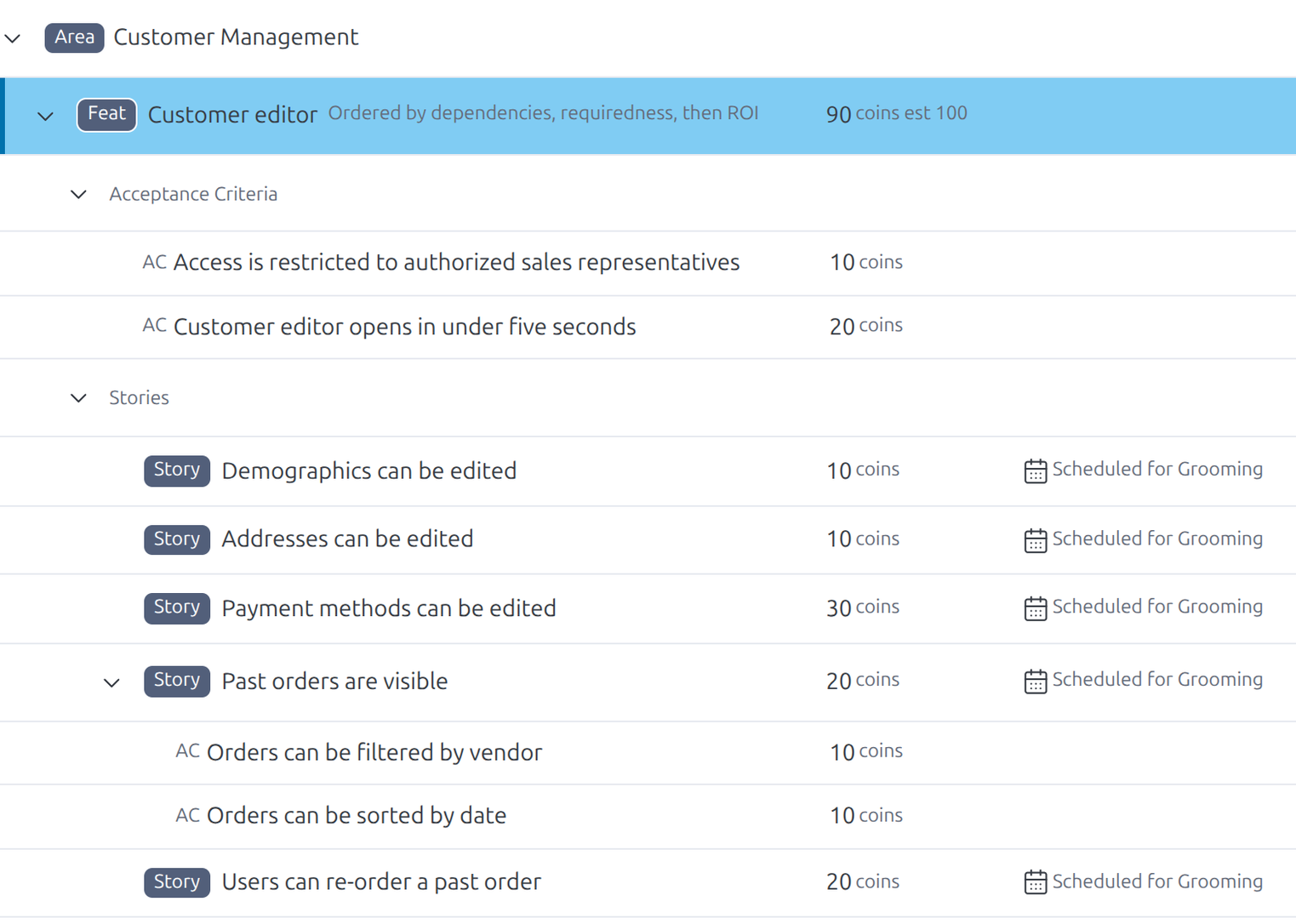
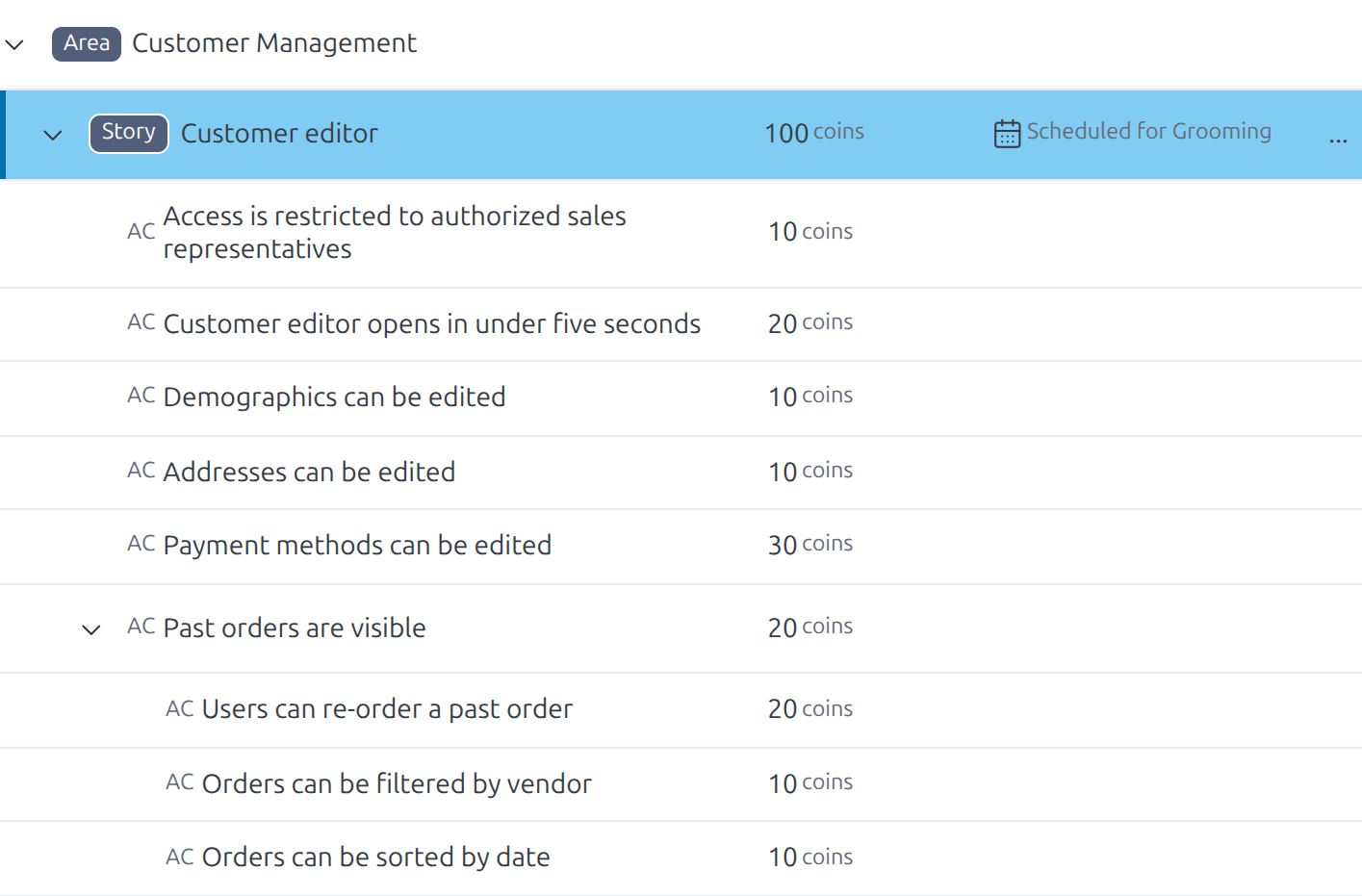
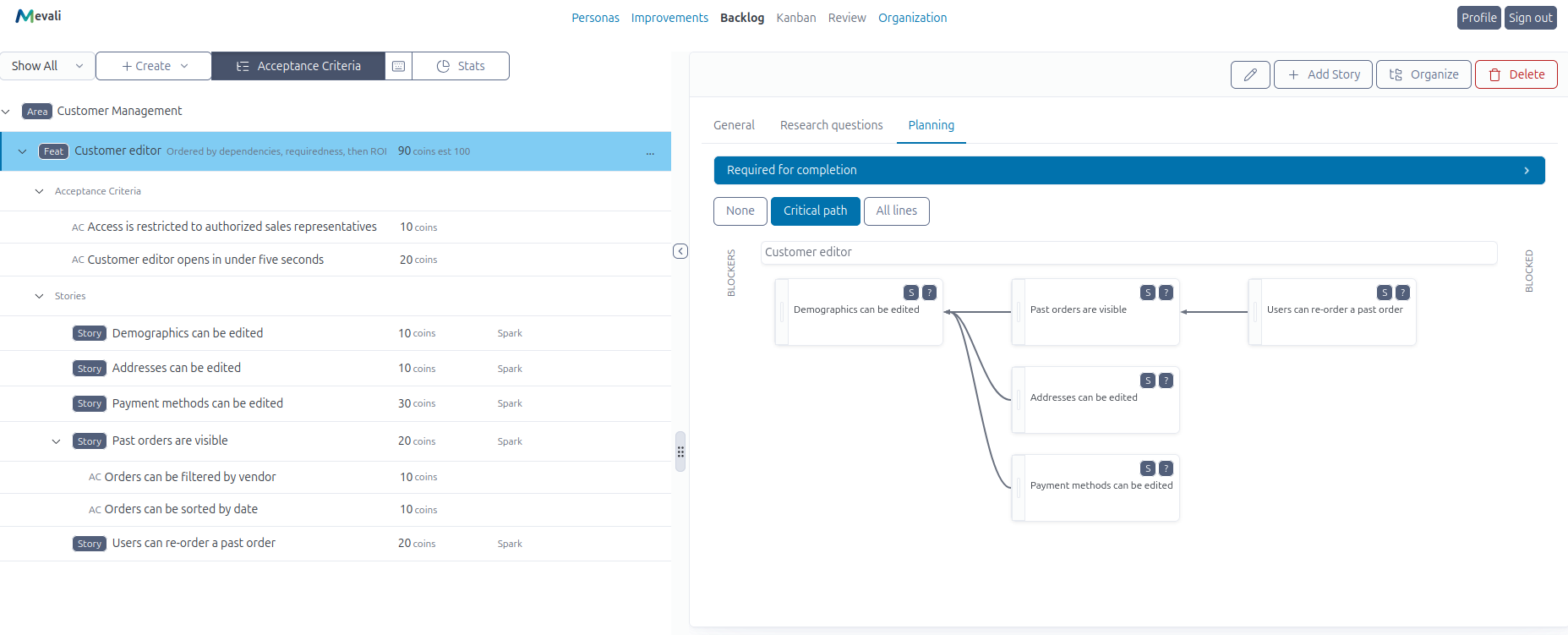
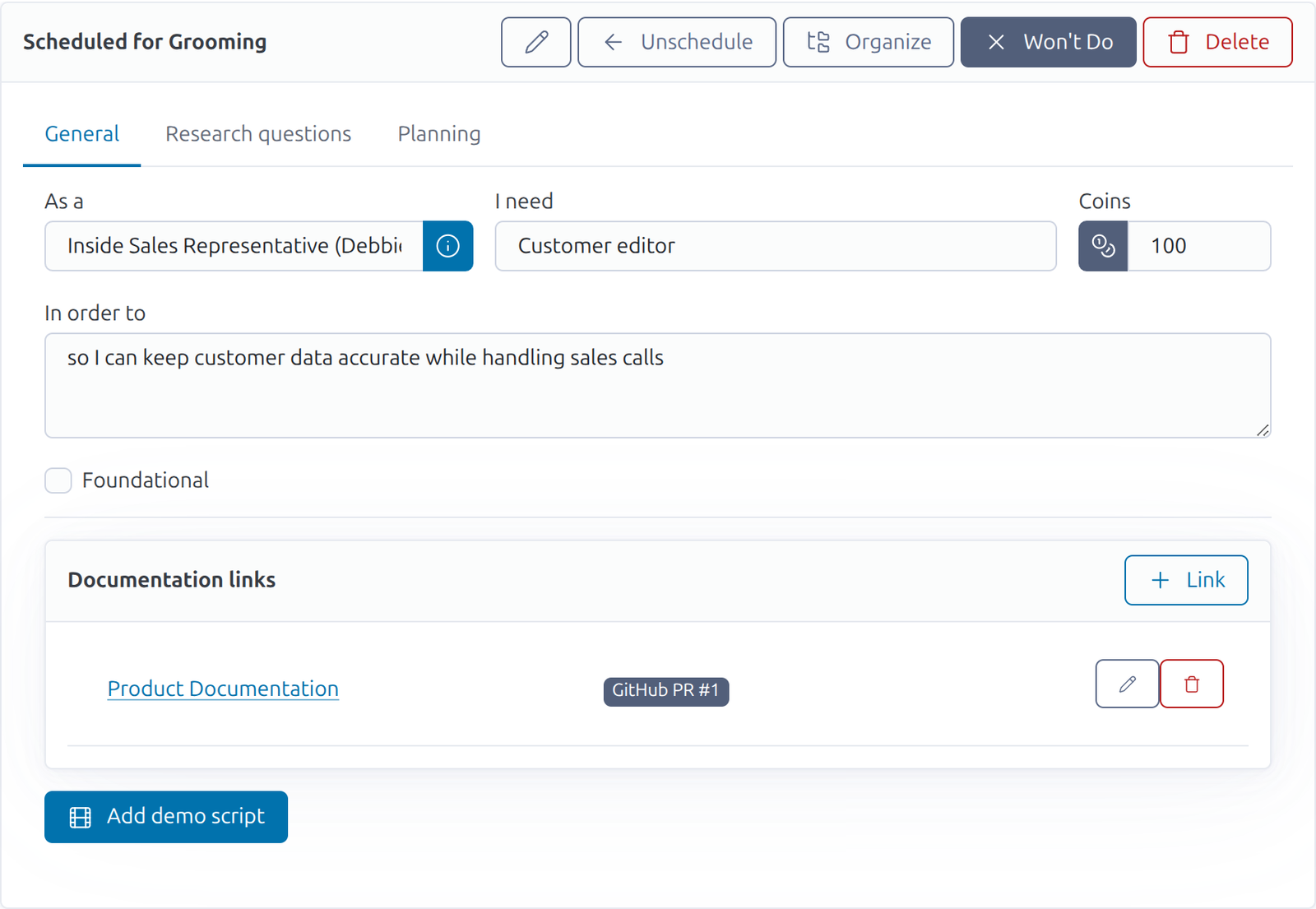
Mevali structures stories as Who, What, Why, Worth (Coins), Acceptance Criteria, and optional demo scripts. That structure avoids blank-canvas writing, powers drag/drop changes, and gives AI agents clean context. Stories can still be created, edited, and reshaped in seconds.
Who, What, and Worth are essential. Why is encouraged. Everything else can be skipped or added later.
See flow before it becomes a problem
Mevali shows where work is stuck and when it stopped being normal.
- Age in column is shown directly on the card, with alerts when an item exceeds the 70th and 95th percentiles for comparable work.
- Working cards rise as they age, making older work harder to overlook.
- Work stuck in the pipeline is prominently shown during the Standup event so the team can decide what to do about it together.
- A Board Flow Analysis report is always available on the Kanban board to highlight flow metrics and issues.

Make the events useful
Events are woven into Mevali so they are fast and useful. Your team decides which events to run and how to run them.
The goal is not more process. It is shorter, clearer conversations that leave the team knowing what to do next.
During an event, Mevali shows the item the facilitator is looking at and makes active edits visible across the team.
Backlog changes appear as they happen, without a save button or a pause in the conversation. One teammate can add acceptance criteria, another can tighten wording, and a third can move the item.
Refinement (Scrum, Scrumban)
Mevali's decomposition, recomposition, and drag-drop dependency tools eliminate waste from refinement. Planning poker is built in, so there is no external tool to synchronize.
The team keeps solving user-focused problems instead of watching someone fight the tool.

Sprint Planning (Scrum only)
Mevali balances planning accuracy against the effort of planning. It uses the information already recorded in the system to keep planning fast and avoid false precision. If planning does not make sense for your team then just change the team operating mode to Scrumban.
- Displays dependencies and waves so risk and parallel work opportunities are obvious.
- Provides interactive forecasting using Monte Carlo simulation with suggested resolutions.

Standup (Scrum, Scrumban)
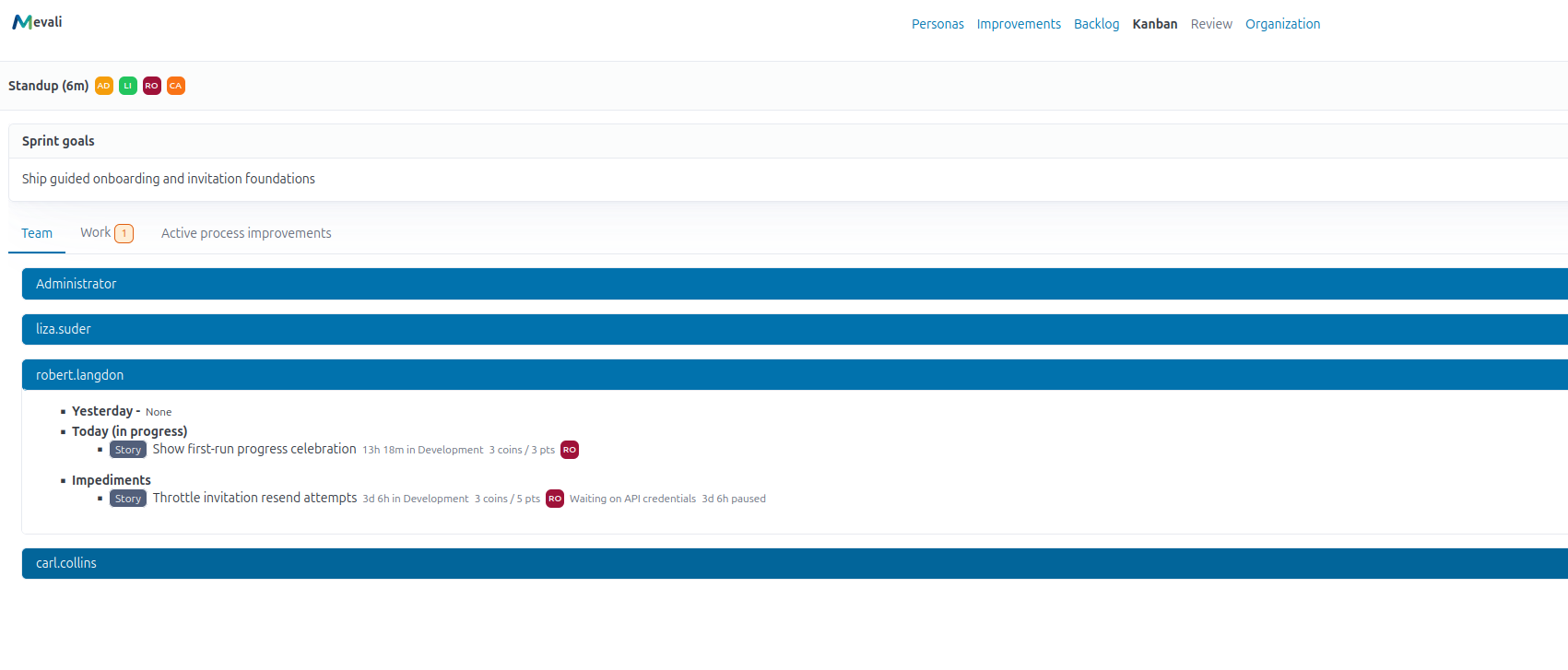
Standup becomes a status report when the facts are not already on the screen. Mevali puts them there: what changed, what is blocked, what is at risk. In Scrum mode, the Sprint goal sits alongside.
Standup is optional. The same reports are available any time.

Retrospective (Scrum, Scrumban)
Process improvements from the last retrospective stay visible, so they can become changes in how the team works rather than useless meeting artifacts.

Period Review (Scrum, Scrumban)
At the end of a Sprint or Scrumban cadence, the team can see what it delivered for each persona. Scrum teams also receive awards that recognize teamwork and early completion.

Bring the pieces together
Mevali brings together user outcomes, right-sized stories, Kanban flow, Scrum events, and continuous improvement.
One system, built for the way teams actually work.